



Smart and breathable cities
Riccardo Frignani
Innovative and technological urban spaces, but above all, cities designed to be sustainable.
The smart city is a city that manages resources intelligently and aims to become economically sustainable and energy self-sufficient, with particular attention to the quality of life and the needs of its citizens. It is therefore an urban area that knows how to keep up with innovations and the digital revolution, but also sustainable and attractive.
It is called smart precisely because the fulcrum is the high connectivity that embraces all areas, where objects and services exchange information with each other thanks to the Internet of Things. The term smart refers above all to a sustainable, efficient and innovative city, capable of guaranteeing a high quality of life to its citizens.
Therefore, it is here where large green spaces also come into play, a fluid traffic that allows one to practice sustainable mobility made of bike sharing, car sharing and hybrid or electric cars. Connected and integrated technological solutions and systems are put in place, dotting cities with sensors that generate a large amount of data, which can feed more advanced services and in real time, and allow administrations an increasingly efficient management in all sectors (public transport, energy management and distribution, waste management; maintenance and optimisation of public buildings, etc.).
The data today, to make way for the future
According to Eurostat statistics, today 75% of the European population lives in cities. This figure is expected to grow globally as well. According to United Nations reports, by 2050 70% of the global population will live in cities.
It is therefore obvious and necessary to move towards a more technological and sustainable urban approach. In Italy, to date, Trento is the city with the most sustainable infrastructures, followed by Turin, in second place, and Bologna, in third. This is what emerges from the fifth edition of EY's Smart City Index released in 2020: a surprise compared to the previous edition, which saw Milan in first place, followed by Turin and Bologna.
More time for us and our planet
The innovations and new technologies introduced in recent years in the areas of development, research and eco-sustainability call for a continuous improvement of urban situations, and it follows that any city can become smarter.
Climate change, the rapid growth of the urban population, the scarcity of energy and water resources, economic and technological changes are just some of the factors that in the useful decades have led the world's urban centres to face innumerable challenges. The objective of Smart Cities is precisely to respond to these challenges and take advantage of the opportunities offered by these changes by trying to create new projects and services to improve the lives of citizens, respecting the environment and future generations.


Being part of a value chain. This is the circular economy for Italproget
Riccardo Frignani
It is not just a matter of reducing waste to a minimum and giving new life to materials and products. The circular economy represents a much broader concept and involves very many actors. We talk about it with Marco Crociani, CEO of Italproget.
- Who is Marco Crociani for Italproget? And what is Italproget for Marco Crociani?
Working in Italproget since 2011, I arrived very young into a newborn company. We believed in a simple but effective project. We have combined skills with passion, determination and dedication to create a company that reflects our values, in the way we act towards our employees and continuing to our customers. I was fortunate to start my professional career alongside people with many years of experience in the sector and this allowed me in a short time to learn know-how, ideas and a search for improvement that never stops. Today I am one of the partners of Italproget and administrator of the company, our growth journey continues every day and is an integral part of our DNA.
- Can you explain to us what the circular economy is to you? Or what it is not!
The circular economy is not a linear economy, a system based on the typical “extract, produce, use and discard” scheme. The linear economy generates wealth by extracting raw materials, processing them, transforming them into products that end up in landfills or, in small part, in the recycling chain. The circular economy is a model of production and consumption that aims at "extending the life" of products, helping to reduce waste to a minimum. This is achieved through the sharing, reuse, repair and recycling of existing materials and products for as long as possible. In the circular economy model, once the product has finished its function, the materials of which it is composed must be reintroduced into the economic cycle and resume generating value. This allows the reduction of the extraction of materials, the use of non-renewable energies and the production of waste.
- Italproget is part of an industry extremely linked to these concepts. It is therefore easy to understand where your sensitivity to the subject comes from.
Italproget progetta e realizza soluzioni chiavi in mano e su misura per la separazione, la selezione e la cernita dei rifiuti. Siamo quindi fornitori di aziende che hanno quotidianamente a che fare con il riciclo. I nostri clienti sono infatti realtà che si occupano proprio della gestione e del recupero dei rifiuti da destinare al riutilizzo. Negli anni, abbiamo realizzato per loro impianti per la separazione delle plastiche, per la produzione di combustibile da rifiuti urbani e speciali, per valorizzare la frazione organica dei rifiuti, per limitare gli scarti da cartiera, ecc.
L’attività svolta dalla nostra filiera è importantissima e indispensabile all’interno del concetto di economia circolare. Ma la “fatica” della “vera” economia circolare non si ferma di certo qui.
- What do you mean by “true” circular economy?
Come ho detto, l’economia circolare è un modello di produzione e di consumo. La riuscita del sistema non è una responsabilità puntuale di una cerchia ristretta di attori, ma è condivisa da molti soggetti. La parola chiave è catena di valore. Tutti gli attori di una stessa catena di valore devono sedersi insieme e collaborare. Non solo i consumatori, non solo i produttori, non soltanto i nostri clienti gestori, non soltanto le amministrazioni.
L’economia circolare, inoltre, per funzionare deve “toccare” tutte le fasi di ogni prodotto che utilizziamo: progettazione, produzione, distribuzione, utilizzo, recupero/riciclo. Invece troppo spesso viene interpretata solo come efficiente gestione dei rifiuti, degli scarti, ma questa è una visione riduttiva.
Ad esempio: parliamo di recupero e riciclo ma poco di concept di costruzione dei prodotti; parliamo di recupero e riciclo ma occorre che la mentalità del consumatore si sposti dal passato e dalla modalità “usa e getta”. Non possiamo pensare di intervenire soltanto a posteriori recuperando ciò che nasce concepito per essere uno scarto.
Dobbiamo fare un salto di qualità, dai consumatori ai produttori, dalle aziende private alle amministrazioni pubbliche: dobbiamo iniziare a fare scelte strategiche sapendo che c’è un mondo fuori e che il “profitto” va generato considerando uno spettro più ampio del proprio orticello. L’economia circolare è infatti una sfida ma anche un’opportunità: di contribuire alla diminuzione di gas serra, di creare milioni di posti di lavoro, di aiutare le economie a risparmiare risorse e ad essere “indipendenti” nella produzione di materie prime.
- For packaging waste, the European target is to achieve a recycling rate of 65% by 2025. A further target is set for 2030: 70%. The target for the overall recycling rate of municipal waste is set at 55% in 2025. Additional targets are set for 2030 (60%) and 2035 (65%). Are these goals achievable for Italy? What direction do you think we should be going in to improve?
The "search for perfection" would make it possible to recover and allocate to a second life almost all the materials that can be transformed. I mean that technologies, cutting-edge solutions and automation are absolutely available to achieve quantitative and qualitative performance unthinkable until a few years ago, but they must be adopted on a larger scale. It should also be considered to allocate to energy production plants all that material suitable for being transformed into fuel and that cannot have a recovery. Only the residue of all the processing will have to be called waste and then the EU target of sending less than 10% of municipal waste to landfill will be ambitious but achievable.

Waste management in the Covid-19 era: the solutions implemented by Alea Ambiente
Riccardo Frignani
We decided to take stock with Paolo Di Giovanni, General Manager of Alea Ambiente on the current situation and future prospects. Alea Ambiente protects the territory and manages resources in a sustainable way, starting from the prevention of waste production in 13 municipalities in the province of Forlì.
- The systems have been shut down and the recycling chain system has stalled. How did lockdown waste affect the disposal cycle?
During the lockdown, Alea Ambiente was involved in the front line alongside the citizens, on the one hand, through the sanitation of the roads, on the other, with the management of the door-to-door collection service, in particular towards homes where there were people who tested positive to the swab, or in conditions of isolation or mandatory quarantine imposed by the Health Authorities. In these cases, where the provisions in force provided for the suspension of separate collection and disposal in an incinerator of the waste produced, we have enhanced the dry waste collection service (unsorted), providing these users, through our call centre, the possibility of requesting a dedicated collection on call. As for the system of the recycling chain, while being aware of its temporary standstill, this did not affect our activity, which continued with the delivery of waste in the usual systems of final destination.
- The closure of production and commercial activities has caused, on the one hand, a momentary decrease in special and urban waste, on the other, however, it has seen an exponential increase in sanitary waste. How has the emergency been handled in this regard? What have been the guidelines issued by the Government also on the protection of operators?
Throughout the emergency period, Alea Ambiente has scrupulously followed the provisions issued by the Ministry of Health, the Emilia-Romagna Region and the Romagna Region's Health Authority, both with regard to the treatment of medical waste, and in terms of operator safety: equipment of sanitising and disinfecting material for the hands and for the cleaning of vehicle interiors, in addition to the individual safety devices already provided (gloves, safety shoes, etc.). To protect counter operators, however, access to users has been limited, encouraging the use of online or telephone channels for non-urgent communications. Finally, with regard to production activities, we have adopted a whole series of measures to help companies, which during the lockdown had in many cases been forced to suspend production: from the zeroing of TARIP for the period of inactivity to facilitations on the payment of the 2019 adjustment.
- Has the Covid-19 emergency in any way brought to light any fragility in the waste management system? Can it serve as an impetus to accelerate the transition to the circular economy?
It is difficult to say whether the situation has favoured a shift towards the circular economy, but as for the territory served by Alea Ambiente, we can say that it has confirmed the effectiveness of the waste collection and management system that we have built since 2018. In particular, the door-to-door collection represented an added value for users, both for those who tested positive or who were quarantined, and for others, who in any case during the lockdown did not have to worry about going out to deliver the waste, leaving it to our operators to collect iit at street level at their homes.
- The Higher Institute for Research and Environmental Protection (Ispra) has estimated that at the end of the year only for masks and gloves will be thrown in the garbage almost 300 thousand tonnes that go into unsorted waste collection. Added to these are disposable products that, from the takeaways of bars to the nonwoven fabric cloaks of hairdressers to the visors of beauticians, are growing for obvious reasons of hygiene and safety. Looking to a more sustainable future, what solutions can be put in place to improve forecasts?
The model promoted by Alea Ambiente is based on a virtuous system that considers waste a resource from which to generate value, and that aims to protect the environment and those who inhabit it through the reduction of waste produced and the increase in the percentage of separate waste collection (which today has reached the considerable share of 82% in our territory). For this reason, we can only be concerned about the increase in the use of disposable products and that, which results, in the production of unsorted waste; certainly many of these products could be replaced, as is already being done, with those that can be washed and sanitised, but this is part of a broader theme, which concerns the sensitivity and the collective mentality; aspects on which Alea Ambiente tries to constantly leverage with information and awareness campaigns, for example on the quality of materials to be recycled.
When the evolution starts from the headquarters. Italproget expands its spaces
Riccardo Frignani
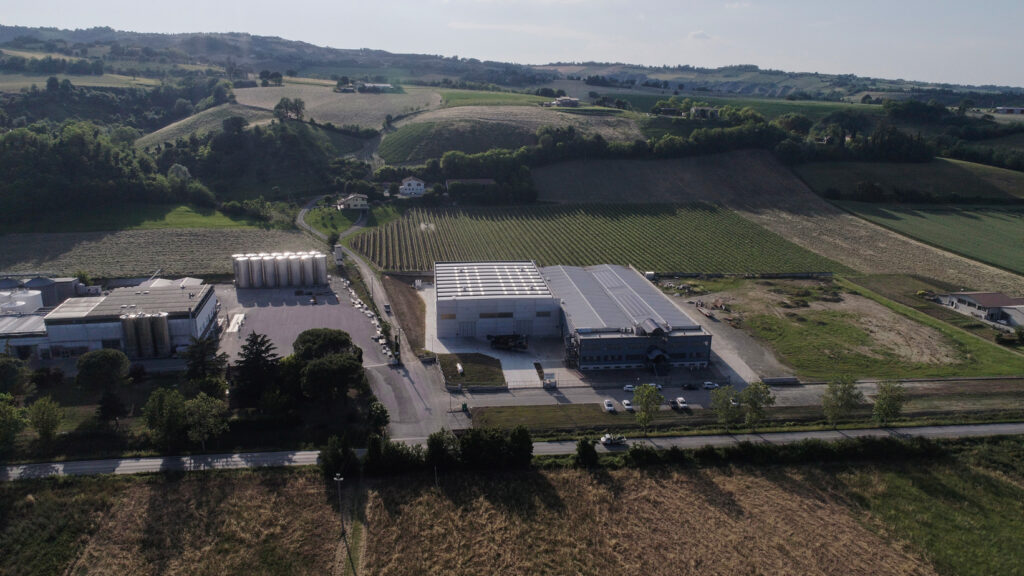
In 2013 Italproget joined the Cangialeoni Group, a group that currently brings together eleven companies with headquarters throughout Northern Italy. In the same year the company changed its headquarters and moved to Meldola (FC), in the current production plant. Since the move to the new headquarters, the owner contemplated the possibility of extending the production spaces available to the company in the adjacent areas. And since moving to the new headquarters, Italproget has acted and thought about the future with the certainty of being able to grow, expand and improve.
Over the years, the project has materialised: the continuous evolution of the company and economic developments have required an upgrade of the production site. The construction works were formally closed in summer 2020, in the middle of the COVID period. The new building is a 2,300 m2 warehouse that adds to the existing 3,200 m2 and 700 m2 of offices. It is made of prefabricated insulated cement and meets the most stringent energy requirements. It is complete with winter heating and summer cooling via heat pump and fully serviced by energy-saving LED lighting. The construction of the new warehouse is part of a larger project to improve the company's work area, from a logistical, energy and workplace safety point of view.
Logistics
The warehouse is complete with four overhead cranes with a capacity of up to 50 tonnes and has a height of 12 m to allow easy handling of machinery and equipment of large dimensions and heavy weights. The logistics of the building has been specifically designed to facilitate the loading and unloading operations within it and to therefore improve, in addition to the receipt of goods, the shipment of finished products that alone counts over 300 billets per year.
Safety
In the context of the expansion works, the company proceeded with the total renovation of the site fire-fighting system by inserting an auxiliary pump and an underground water collection tank with a capacity of 60 cubic meters that feeds the entire line inside and outside the buildings.
Energy
At the same time as the construction of the new warehouse, the company invested in the installation of a new photovoltaic system of more than 50 kW located on the roof of the existing building. This system, in the summer months, contributes to producing about 60% of the company's energy needs and, on an annual basis, more than 30%. The system also represents a space for collaboration and for the development of synergies with other companies of the Cangialeoni Group.

Italproget accelerator belts for powering optical readers
Riccardo Frignani
The LA series represents Italproget's technical solution for powering optical readers.
The latest model, recently successfully installed in a COREPLA sorting centre (SSF) for the separation of plastics, is able to reach a speed of 5 m/s to meet the standards required by the latest generation selectors.
The LA series, like the entire range of Italproget belts, is made with robust and bolted elements to ensure reliability, durability and easy maintenance.
The standard series can be customised through numerous special accessories (output crate, motorised rollers, support structure for reading units, etc.) that respond to any customer need and that are added to the optional standards that can be installed on Italproget belts (scrapers, protections, hoods, magnetic zones, emergency ropes, etc.).


EcoMed 2020
Riccardo Frignani
From 16 to 18 July we will be in Catania for the second edition of the Ecomed 2020 Trade Fair, the first green expo of the Mediterranean created to offer a moment of encounter between demand and supply of ideas and technologies capable of promoting, truly, the sustainability of our living in harmony with the “ENVIRONMENT".
The purpose of the Ecomed Trade Fair is to enhance and make dialogue between some of the main and most innovative experiences, giving the right space to those who are today mainly engaged in the cycle of water, waste, reclamation and renewable energy sources.
Installed a new MID approved and certified weighing system that meets COREPLA requirements
Riccardo Frignani
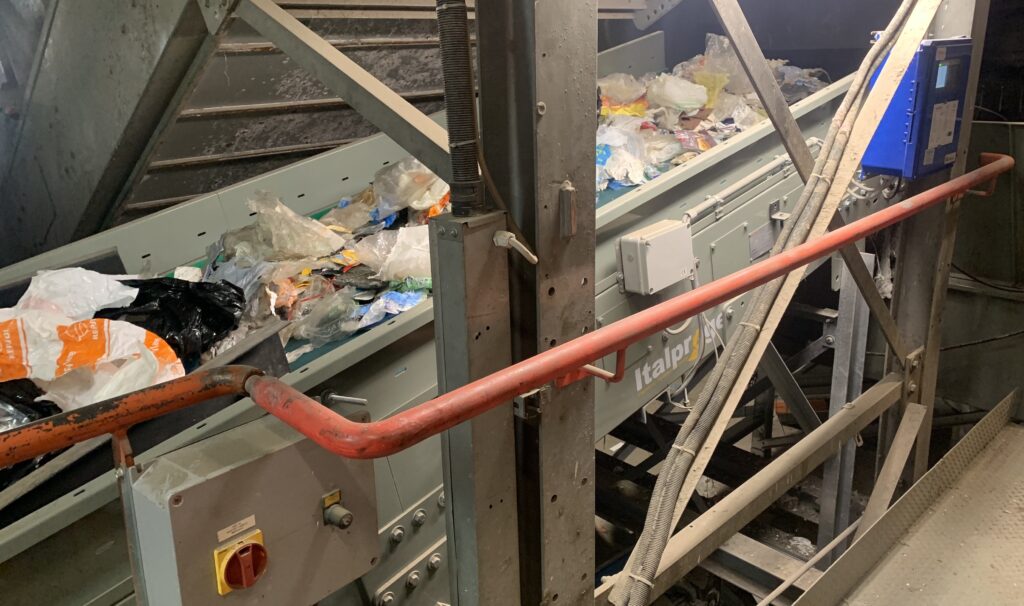
Italproget has successfully completed the installation of a MID approved and certified weighing system that meets the requirements established by COREPLA, the National Consortium for the Collection, Recycling and Recovery of Plastic Packaging.
Ecomondo 2019
Riccardo Frignani
From 5 to 8 November we will participate in Ecomondo, the reference trade fair in Europe for industrial and technological innovation of the circular economy.

Italproget Rotating Screen

Riccardo Frignani
The Italproget rotating screen allows a dimensional separation of the incoming waste into two or more fractions.